Playing so many rounds of Pepper Panic that the Royal Games admins should probably start checking on me.
Replacing imagination with procrastination in this song from Disney World.
Thinking about my coworker who will full-on vogue at the slightest provocation and how watching him is literally my favorite thing in the world.
Catching up on my correspondence, which I also put off for an unreasonable amount of time.
Debating what I should read for so long that I end up reading nothing.
Compulsively checking my e-mail even though I only ever get messages from retailers.
Scrolling through Facebook until there is nothing left for me to see.
***
Neglecting to compose even the simplest blog posts is becoming second nature to me. I hope that I can be better this year and get back on some kind of schedule, even if it's just once a month. That way, I'm still putting my work into the world even when no one else wants to publish my writing. Because honestly, if I don't keep going, I might die.
-Cate-
Showing posts with label personal. Show all posts
Showing posts with label personal. Show all posts
Wednesday, February 27, 2019

Wednesday, October 3, 2018
Good Things for Autumn
There is something about fall that I love. The leaves changing color, the cool rain, the earlier nightfall, and the fashion choices are all excellent. It's a cozy time for me, more comfortable than summer and winter, more fun than spring. Plus, it's Halloween season, which makes me so happy.

Like Martha Stewart before me, I wanted to share a few thinks I think are great for fall. This is, of course, a completely subjective list, but I hope it's one that inspires you!
1) Loaf Cakes
To match the denser feeling that comes with fall, why not whip up a loaf cake? They come in all sorts of flavors, including those seasonal classics, apple and pumpkin. You can even match the shape of the loaf to the season if you so desire!
2) Walking Trails
I'm not the biggest fan of being outside, but it's difficult to pass up the chance to step on some crunchy leaves and experience the turning of the colors. The best way to do this, in my opinion, is to either take a drive down a tree-lined corridor or get yourself to a walking trail in a local park. Your state's Department of Natural Resources can give you great ideas about where to do this.
3) Tiffany & Co. Perfume
Recently, I decided it was time to find a new fall fragrance. You can always go with the typical classics from Bath and Body Works--something like Warm Vanilla Sugar is good, and they have an ever-changing range of seasonal scents. Or, if you're looking for something more sophisticated, as I was, you can try this perfume, with patchouli and musk at its base, to give you that warm feeling.
4) Fahrenheit 451
Y'all should have seen this one coming. There is no book that says FALL to me like Fahrenheit. This is the perfect season to read (or, in my case, reread) Bradbury's classic.
What would you add to your own list of fall essentials? And how do you feel about the debate about fall versus autumn?

Whichever side you come down on, I hope you have an excellent season!
-Cate-

Monday, September 24, 2018
Why I Didn't Report
This post is for LB, who did report.
I've never been raped, for which I'm grateful.* But I have been sexually harassed on several occasions, been made uncomfortable by male attention (in a way unconnected to my anxiety), and thrice been touched against my will, all by different people, and in each instance as an adult.** So now I'm here to list the reasons why I didn't report.
1) Because feeling squeamish during an encounter isn't enough of a reason to make a claim against someone.
2) Because I was conditioned by society to believe that I should be flattered by the attention.
3) Because I brushed it off as a symptom of his drunkenness.
4) Because part of me wanted it, and I thought that made the whole thing okay.
5) Because I was afraid of the consequences of saying no.
6) Because he was sensitive and vulnerable and I didn't want to make it worse for him.
None of these people are in my life anymore, although only by circumstance in all but the last case. Him, I had to cut out because of his terrible behavior (on this front and others). And, in all but the last two cases, I have forgiven the transgression.***
Because it's tough, navigating these situations. I can't know how many of them were one-off incidents borne of alcohol or a moment of bad judgment, and that makes it seem easier to just move past an awkward, uncomfortable, or inappropriate moment. Also, when the incident is minor, moving past it feels like a better choice than making a fuss. And when you have to see some of these people every day of your life, learning to live with the situation makes survival more possible.
However.
Having said all that, I do think that speaking up and defending yourself is important. But having said THAT, I completely understand why some--maybe most--survivors of harassment or assault choose to bury the pain, embarrassment, and shame.
I believe Dr. Ford. I believe all of my friends who have made the decision not to report. I believe the women (and men) who have reported and been brushed aside, ignored, and scapegoated. Because I've been there, too.
-Cate-
* The fact that I feel I have to express my gratitude for not having my bodily autonomy violated too badly is another discussion for another time.
** I'm so lucky not to have experienced any of this as a child. Such a sin against minors is literally the most disgusting thing I can imagine.
*** Whether I should or not.
Wednesday, January 17, 2018
On Rereading
If you're familiar with this blog, you've seen my reading list section, which names every book I've read since 2011. I've kept this record more for my own edification than anything, but I feel it can also serve as a jumping-off point for anyone searching for a tome to consume or interested in what a writer actually takes in (short answer: everything).
But my list took a nosedive in 2017. The number of books I read last year was considerably lower than it had been in the past--fewer than my usual goal of one book per week. On the one hand, it is true that I slacked off, partly due to changing circumstances but also thanks to a newfound inability to concentrate on anything for very long (thank you, depression, for making it difficult for me to focus). On the other hand, I also decided to take time in the final quarter of the year to re-read five books that mean something to me.
It started with Steve Almond, whose (Not That You Asked): Rants, Exploits, and Obsessions brightened my grad school days and which I wanted to revisit for its instructive wit and keen observation. His meditation on Kurt Vonnegut triggered in me a need to spend time with favorite novels of my own. So I went on to Robert Coover's Briar Rose, still a thrilling novella to behold some ten years after I first encountered it. The suffering lovers at the center of Coover's tale, of course, made me think of Thomas Hardy's exquisitely painful plots, so The Return of the Native called out to me.
It was also October, though, and with Halloween upon the doorstep, I put Hardy on hold to tackle House of Leaves, Mark Z. Danielewski's intricate tale of fractured humans and the things that haunt them. After that, it was back to Hardy, and then of course I had to round out the season with Fahrenheit 451, my long-standing favorite.
I could have gone on, poring over other novels that have influenced me along the way. In fact, I have no doubt I could make an entire career of living inside fictional worlds I've already encountered. More than likely, I will halt my new-to-me progress again this year to re-read more old loves.
Because it only feels right. In spite of the march of progress and the never-ending supply of new material (as well as my bad habit of going on book-buying binges), I feel I owe it to myself--and the novels, in a way--to look back. After all, what is the point of saying something like, "Oh, yes: The Bell Jar had a profound effect on my writing" if the details of that book are getting hazy and I can no longer cite specific moments that set me on fire? And anyway, re-reading gives you that same feeling you get when you go home for the holidays: relief, comfort, and anticipation of the good things ahead. (Side note: if this isn't how you feel about going home for the holidays, you have my sympathies, and also my permission to insert your own analogy here.)
As for what I re-read this time around, I can say the following:
- I relate to the characters in The Return of the Native better now than I did when I was 17, which made this a richer reading experience for me.
- Although House of Leaves didn't scare me this time (it terrified me as a 16-year-old), it still caught my attention and left me wanting the next page.
- Steve Almond is bae just as much today as he was when I first saw him in Cambridge, MA in 2011.
- Coover's work is every bit as magical as I remember.
- Fahrenheit still feels like my forever book, and I hope that never changes.
And I'm curious to know: what books do you like to re-read? Tell me in the comments.
-Cate-
Wednesday, November 15, 2017
Holiday Hiatus
Y'all, I am beat.
I'm not just tired in my body. I'm tired in my soul. And I want to take a break, go into hibernation like the animals do. Instead, the most I can manage is taking a holiday hiatus from this blog, which I hardly work on at all in the first place.
Here's hoping 2018 will be better, because I know I'm not the only one who needs to hit the reset button.
-Cate-
Wednesday, November 8, 2017
On Adulthood
You remember when you were a kid and being an adult seemed so legit? You would get to vote and drive a car and use credit cards, and you wouldn't have a curfew because you'd be in charge of your own damn self. Your mom wouldn't pick out your clothes anymore, you could buy the food you wanted and none of the healthy stuff your parents thrust upon you, and you could finally--finally--live the life you thought you'd have (based on the happy endings of the films you loved).
Well, children, I am *cough*sputter*cough* years old, and I am here to tell you what you have undoubtedly gleaned for yourself: being an adult is bullshit.
I'm not just saying this because I'm in a bad place right now, although that is certainly a contributing factor. I'm also saying it because I've seen it reflected in the faces of friends and colleagues lately. But more importantly, I'm saying it because sometimes life as an adult sucks because you yourself suck.
This isn't my way of accusing anyone else of being lame or terrible. It's actually me acknowledging how awful I am myself, or at least how heinous I can be at times. Last week, when I wrote a post about youth being awesome, it was partly because I truly feel that way, and partly because I was hoping to find a way back to that good, boundless spirit young people often have.
This past summer was foul, and it bled over into autumn, in no small measure because I've made two huge mistakes this year that altered the course of things and contributed to a deepening of my own depression. The first mistake--job related--is something I may be able to fix in the long run, if I can manage to recapture the drive I had in simpler, younger times.
The second mistake, a personal one--well, it looks like I won't be able to rectify the situation, which is at least 50 percent my fault and sent me into a spiral of self-doubt, anxiety, and pseudo-regret (I say pseudo because I don't actually regret this thing, just the way it turned out). Maybe someday I'll be able to claw myself out of that hole, but I can't count on that, because adults are stubborn and our brains aren't as easily rewired as they were when we were young, and it appears that no amount of passion, belief, or longing can change this.
Because of my brain chemistry, I've never been a naturally optimistic person, as I'm sure you can all tell from reading this. But I said it last week and I'll say it again: it would be great if we could learn something about having an outlook for a more hopeful future from our young people, because adults as a group could use an injection of that from time to time, so we don't end up constantly despairing about our lives.
-Cate-
Wednesday, November 1, 2017
On Youth
People often have trouble believing that I am *cough*sputter*cough* years old. It turns out that the single genetic gift my parents bestowed upon me (sorry, but it's true) is a young-looking face. Sometimes this works in my favor, such as when I was employed by a high school and needed to be able to connect with teenage students. Other times, it's a burden; people decline to take me seriously because I must have less experience or education.
Speaking as someone who is old enough to have finished grad school in 2012(!), though, I assure you that I've been through some shit (both personally and professionally), and the government has been trusting me to drive, consume alcohol, and vote for some time now. I've suffered through my quarter-life crisis, and my childhood pets are long gone. And I've reached an age that even adults consider to be adult-like.
But on the other hand, let's not discount youth! Young people--let's say 16-26--often have insights that full-blown adults do not, simply because adults have too much baggage and experience behind them to look at certain events or problems with fresh eyes. They are also full of energy, and some of them still have that boundless capacity for love and friendship that the rest of us have lost. Oftentimes, I've found that the creativity of young people far exceeds that of adults, because they are still at a time in life when others actively encourage their unusual points of view or their creative bents.
I think youth is a good thing, and young people are an asset to our society. Let's not give them such short shrift. After all, as Whitney said, the children are our future.
-Cate-
Wednesday, October 18, 2017
Season's Greetings from Retail Land
Throughout my working life, both in retail and academia, I've endured any number of indignities: long hours, truncated lunch breaks, dirty looks, and the like. About two months into my most recent retail experience, however, I was on the wrong end of the worst insult I've ever received on the job.
Let me preface the insult itself by saying that I work in the beauty industry, and of course my employer has a makeup dress code, so I put a full face on every time I'm scheduled. Also, if you've ever met me, you already know the next part: I suffer from what the kids call Resting Bitch Face, and it's genetic; both of my parents look perma-stern. I've accepted this part of myself and moved on with my life. Some people, however, apparently have not.
This terrible customer, for example.
After insulting my brand, holding up my line, threatening me with a mention of my manager, and then berating me for not doing something I was explicitly trained not to do, one disgruntled customer decided that I was smirking at her, and the conversation took a turn for the even worse.
Cate: That's just the way my face looks.
Customer: Well, it's a terrible face for selling beauty.
Yes, the woman actually said this to me. But I have to be honest with you here. The insult itself is not what I found outrageous in this situation. Rather, it was her sense of entitlement.
I'm not even going to expand on this, except for adding a single comment: DO NOT BE THAT CUSTOMER. Retail workers deserve better than that, and you were almost certainly not raised to be such a piece of trash, especially during the upcoming holiday season.
Please and thank you, from all of us to you.
-Cate-
Wednesday, October 11, 2017
From Whence You Came
My father recently asked me a question that I have sometimes mulled over privately, but which I never expected to have to answer for realsies, given my level of absolute non-fame: do you consider yourself a Southern writer?
First, some background. Some of you know that while I was born in North Carolina, I was raised in Michigan, yet I have also spent the bulk of my adult life living and working primarily in the South (specifically, North Carolina and Louisiana). As a result, I've often--sometimes inadvertently--been immersed in the world of Southern literature or Southern writers. However, I've also spent a great deal of time around New England (particularly Boston) writers because of my grad school experiences.
Also, there is some debate about what constitutes Southern literature, because there is much debate about what actually constitutes the South. The Line isn't always the most effective way of answering this, because there are many out there who will swear to you that Kentucky, Virginia, and even North Carolina aren't really Southern states. Then there is the issue of Maryland, which is tricky because it is now Northern in character but historically was considered Southern.
So how do we categorize someone like Edgar Allan Poe? Personally, I don't consider him to be a Southern writer, but I suspect that he would categorize himself that way, given the opportunity. Meanwhile, I absolutely consider Mark Twain to be a Southern writer, although he spent most of his life in Missouri, Connecticut, and various Northern cities (with stops in California).
As far as that goes, who do we consider to be American writers? Sylvia Plath provides a good example for this question: undeniably American (born, raised, and partly educated in Massachusetts) and influenced in part by other Boston Writers (such as Robert Lowell and Anne Sexton), yet entrenched in British life (studying and living out the most prolific part of her career in England) and surrounded by English and Irish writers (Ted Hughes and Seamus Heaney) while still communing with other expatriates (like WS Merwin). Most people would probably categorize her as American, although there is also a case to be made for her as an English writer.
A similar debate can be had about Gertrude Stein, another famous expat. She was American by birth but dwelled in France for much of her life. If anything, I would think the best designation for her is international, as she spent her time moving in artistic circles populated by people from many countries, including America (Ernest Hemingway), France (Henri Matisse), and Spain (Pablo Picasso), among others.
My basic response about my own situation was, "I don't think anyone has ever accused me of being a Southern writer, and I hope they never do." This has nothing to do with my opinion of Southern literature, which I appreciate and sometimes even love (here's looking at you, Faulkner). Rather, it has to do with my perception of myself as well as my priorities and my style. I would categorize myself as a Michigan writer, and a proud one.
What other people call me is, ultimately, their business, I suppose, but I feel like I would be vocal about this one thing, were I in a position to do so, because I do have strong feelings about it. But on the other hand, it's nice just to be called a writer at all, even if I sometimes have trouble giving myself that designation (in spite of my enormous ego and repeated declarations on this blog).
-Cate-
Wednesday, October 4, 2017
Homebodies
Awhile back, Dad and I went to hear a panel discussion/reading by authors from the anthology And Here: 100 Years of Upper Peninsula Writing, 1917-2017. It was a good time, and if any of the authors happen to come through your town, I recommend hearing what they have to say if you are at all interested in the UP or Michigan writing in general.
During the event, one of the authors mentioned that he is always eager to get back to Detroit; he appears to have arrived at a point in his life where he wants to be back in HIS PLACE, which I absolutely understand. Later that night, Dad asked me about this, and I realized something I've never really considered before: homebodiness can take two distinct forms.
The first, of course, is homebodiness of the house, or what we think of as the classic homebody--in other words, someone who enjoys being in their home, would rather stay in than go out, and enjoys solitude. I am this type of homebody at least 80 percent of the time.
The other variety is homebodiness of place--in other words, someone who wants to spend their time in their neighborhood or city (or, I suppose, even specific other places, like a theater or library). The author mentioned above is of the second type.
When I consider it, I'm surprised by the number of people I know who could be categorized as homebodies. But the more I think, the more I realize it's probably a lasting effect of our tribal past: staying in the same location because we know it's familiar and safe.
This isn't a criticism at all; I think it's very beneficial to have a connection to your surroundings, as you can be an effective guide to visitors or transplants, are more likely to keep your dollars in your area and thereby support its economic development, and build a stronger personal community for yourself.
So yes: I am all for homebodiness of place!
-Cate-
Wednesday, September 27, 2017
DO YOU UNDERSTAND THE WORDS THAT ARE COMIN' OUTTA MY MOUTH
I found myself in an interesting position at work the other day, and by "interesting," I mean "frustrating." A woman shanghaied me into demonstrating multiple iterations of the same product, and in the course of this, she asked me a question that made clear how skeptical she was of my expertise. Although I outwardly answered her in the politest way I could, in my head, I went, "The fuck you just say to me?"
And that right there is the thing I want to focus on today. Not the customer's demands, but the response I had and how it is reflective of the difference between a writer's personal life and their recorded words.
Let's parse this out. "The fuck you just say to me" is hardly a correct sentence; if you replace the missing words, it reads, "What the fuck did you just say to me?" I've discussed my Midwestern dialect before on this blog, and it's something of which I've become increasingly aware over the years, particularly after spending approximately a third of my life living in the South. My speech patterns differ from those of the people by whom I've often been surrounded, and on occasion, they have called me out on it, which is fine.
What I've been more self-conscious about, however, is the disparity between the way I speak and the way I write. Any time I have a meeting or an interview, I start to freeze up partway through, because I know I could respond to questions or make my own points far more coherently on the page, and my anxiety kicks into overdrive, thereby further garbling my speech. I hate this aspect of my personality, and I do try to rein it in, but it's tough.
In a perfect world, I would have the ability to speak clearly and elegantly at all times, but that's simply not the case, and I suppose it's a flaw I have to accept in myself. Also, I feel like this is a common theme among writers, at least based on conversations I've had with my compatriots and live readings or discussions I've seen throughout the years.
This being a far from perfect world, however, I have to work toward filtering myself better at the outset, and at thinking more quickly so I can form those beautiful sentences I want to utter. Another self-improvement project, then, but at least a (reasonably) worthy one. This way, everyone will someday be able to understand the words that are coming out of my mouth.
-Cate-
Wednesday, September 13, 2017
Pleased to Meet Me?
"Who am I? Where am I? Why am I?"
These questions were often rhetorically posed to me by one of my former supervisors, who asked them with a dazed look on his face meant to mock the undergraduate students who were seemingly unable to comprehend their coursework or lives. On the one hand, he was onto something, as we didn't always encounter the brightest minds of our times. On the other, "Who am I" is a question as old as humanity, one we often struggle to answer for ourselves, let alone for other people.
Walt Whitman declared that "I am large, I contain multitudes." Here, then, is a man who acknowledges that he is not a single thing but is comprised of many personae, from a patriot ("O Captain! My Captain!") to the ghost of his childhood self ("Out of the Cradle Endlessly Rocking") to a lover ("We Two Boys Together Clinging") to an unabashed voyeur ("Crossing Brooklyn Ferry"). Being Whitman, though, he was completely willing to expose all of his inner selves to the world, because he loved us and wanted to share everything.
For the rest of us, it's not always that easy. Sharing our authentic feelings and showing our true colors can be intimidating, especially for introverts. When it comes to writing, though, I find it easier to be open and honest. Yet a dilemma remains: how best to present myself? Or, put another way, what voice am I meant to use here?
Dinty W. Moore puts it best:
Although the personal essay is a form of nonfiction, and thus the self you bring to your essay should be an honest representation of who you are, we are in fact made of many selves: our happy self, our sad self, our indignant self, our skeptical self, our optimistic self, our worried self, our demanding self, our rascally self and on and on and on. But in truth, if we attempt to bring all of these selves to every essay that we write, we run the risk of seeming so uncertain, so indecisive, that we merely confuse the reader.
Here, he's specifically discussing personal essays and memoirs, but I think it can apply to any form of writing, particularly poetry, and even fiction: if you simply take this advice and apply it to a first-person narrator, you will be able to construct a character with a consistent voice throughout your novel or story.
For my part, I've never spent much time thinking about my blogging persona. Perhaps I have a singular attitude that comes naturally to me depending on the topic I'm discussing: passionate, skeptical, excited, literary, and so on. When it comes to writing essays, however, things are different. I struggle to make myself coherent. The form somehow affects me, puts more pressure on me, whether it should or not.
So I'm going to take the advice Moore lays out elsewhere in his piece and examine my motivations and the things I'm trying to convey when writing essays so I can share myself more effectively with the reader. After all, a writer is nothing without an audience, and garbling your message can drive readers away.
-Cate-
Wednesday, September 6, 2017
Summer Book Report
Last year, I wrote a post about how I spent my summer vacation. While I'm taking a slightly different approach this year, I'd still like to report back to everyone on my literary-centric activities.
- Several months ago, I joined the Book of the Month Club, even though I don't need more books or even anyone suggesting titles to me. But on the other hand, their curated selections allow you to take a step back from the bookstore, which is a crazy thing for me to say, since I adore bookstores, but I recognize the value of this for people who maybe don't have time for shopping but still want to get at least one novel in from time to time. Definitely check out any deals they have, because sometimes you'll be able to get an extra book (or a tote!) for free.
- In July, I visited both locations of The Island Bookstore: Mackinaw City and Mackinac Island, MI. Both have good selections of Michigan titles, and the island location is surprisingly well-stocked with both books and gifts, considering their small retail space and the fact that the rest of the street is lined mainly with souvenir shops and fudge makers.
- Also in July, I made return trips to both McLean & Eakin in Petoskey, MI, and Schuler Books in Lansing, MI.
- And once more in July: the first annual Detroit Festival of Books was held in the Eastern Market. The event featured local authors and booksellers, and the turnout seemed to be good. While there, I picked up a title from The Porcupine's Quill, whose cover stock was absolutely gorgeous.
- In August, Dad and I went to Literati Bookstore in Ann Arbor, MI to see a panel discussion about the new anthology And Here: 100 Years of Upper Peninsula Writing, 1917-2017, which was a good time. Sue Harrison, M.L. Liebler, Phillip Sterling, and Keith Taylor were on the panel, and I appreciate their answers to a question I posed after the reading! (For an interview with Keith Taylor, check out the Brilliant Books website!)
- As a side note, Bookriot has released a list of the best bookstores in every state, and--whaddaya know--Brilliant Books, Literati, and McLean & Eakin are all represented in the Michigan section!
- In August, Dad and I went to Literati Bookstore in Ann Arbor, MI to see a panel discussion about the new anthology And Here: 100 Years of Upper Peninsula Writing, 1917-2017, which was a good time. Sue Harrison, M.L. Liebler, Phillip Sterling, and Keith Taylor were on the panel, and I appreciate their answers to a question I posed after the reading! (For an interview with Keith Taylor, check out the Brilliant Books website!)
- As a side note, Bookriot has released a list of the best bookstores in every state, and--whaddaya know--Brilliant Books, Literati, and McLean & Eakin are all represented in the Michigan section!
- Through my mother's generosity, I was able to enroll in an online course offered through GrubStreet, the popular Boston writing center. Six Weeks, Six Essays was taught by Grace Talusan, whose prompts, resources, and feedback were great. Although their summer courses are almost over, the center's online offerings for the fall are already listed on the site, so check that out if you'd like to brush up on your creative writing skills but don't want to go back to school.
- As you may have noticed, I actually took some time to blog this summer! Wow, what a concept: keeping up with my own project for once? Never saw that coming, tbh.
- If you haven't seen it yet: I wrote a(n almost) 2,500-word essay here on the blog about Sylvia Plath that is messy and ridiculous and fraught, but it felt good to write something approaching critical territory again. It's rare for me to engage in (nearly) academic composition, but it seemed like the thing to do at that particular moment, so there you have it.
- If you haven't seen it yet: I wrote a(n almost) 2,500-word essay here on the blog about Sylvia Plath that is messy and ridiculous and fraught, but it felt good to write something approaching critical territory again. It's rare for me to engage in (nearly) academic composition, but it seemed like the thing to do at that particular moment, so there you have it.
- And to wrap things up, here's a cautionary tale: when I first moved home, the majority of my books were still packed up, so I ran over to the local Barnes & Noble to grab a couple of titles to tide me over. While browsing, I decided I needed more Chuck Klosterman in my life (which is perpetually true), and I bought a copy of I Wear the Black Hat to satisfy myself. I read it, and it was good, and I set it aside to be shelved later. Two or three days after that, I was looking for something in a box and found the book, but I couldn't remember having left it there. Lo and behold, I later saw the book on the bookshelf in my room.
Yes, kids, I made the mistake all serious readers have made at least once in their lives: I bought a copy of this particular tome sometime in the past (I suspect it was last summer), forgot I had it, and then bought a new copy later. This is, I think, the second time I've faced such a dilemma, and I fully expect it to happen again in the future. #failcatefail
-Cate-
-Cate-
Wednesday, August 30, 2017
FOMO
When I was an adolescent, I was desperately uncool. (I like how I'm saying this as though I've become super-hip and popular in the intervening years. EL OH EL NOPE.) As a result, I always came to fads late. My Tamagotchi was probably one of the last ever sold. I skipped the Furby altogether, and I'm glad I did, because those things are scary. One particularly bitchy classmate made fun of me in the third grade because I still played with Barbies. This is how it went back then.

Today, I'm no better at keeping up with trends, but in a different, more adult way. Gone are the times when I was late to the party; instead, I'm skeptical of the party itself. The hyper-manicured eyebrow? I don't get it at all and refuse to participate. "Festival style" baffles me, both because of its appropriative aspects and because I don't see the appeal of things like Bonnaroo and Burning Man. Reality television in the vein of the Real Housewives franchise holds no interest for me.
This might sound surprising coming from someone who claims to be a devotée of popular culture, and in a way, it is. When it comes to pop culture, I lean more nerdy, more literature-centric, more critical (in the evaluative sense), so I walk a different path, ignoring the things that don't speak to me in favor of topics that spark my curiosity.
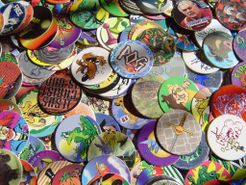
As a child, I wanted to fit in badly enough that even something as inane as pogs seemed essential to my life; unfortunately, by the time I arrived at the station, the train had departed and I was left trying to catch the caboose. Now, I'm less susceptible to that impulse, although I do still occasionally seek opportunities to be accepted into the so-called "cool kids" group. That's only human, I think.

Perhaps as I continue to age, I'll worry less and less about that cutting edge. It usually turns out to be ineffectual, anyway, or lacks historical or philosophical resonance. The exception to this may prove to be something like the Kardashian family; if that turns out to be the case, I'll eat my words. For now, though, I'll continue to wonder what I might be missing when I don't consume a given type of media.
Here's hoping I'm not missing anything at all.
-Cate-

Wednesday, August 23, 2017
The Way I Resist
As you might imagine, I've been thinking about politics a great deal lately.
20 January was an interesting day, for America and for the world. Since that time, the word that's come to mind the most since then is shitshow. I won't even bother listing off the offenses committed by the executive and legislative branches of the government, because it's too depressing and many others have already offered their commentary.
But I will tell you a story about how these past seven months have affected me.
When I broke my book ban, I broke it hard, because my method of helping the world is through reading. Stick with me on this: educating myself about the past, present, and future seem to be the best way I can arm myself to fight the good fight.
During the week after Election Day, I was surrounded by people who were honestly, gut-wrenchingly terrified of what the future might hold for them and their loved ones. And I won't lie: I was scared, too. I remain trepidatious. My focus at that time, though, was on those others, most of whom weren't in a position to put up their dukes, as it were.
One night, I found myself at a bookstore. Though my aim was to find something my brother might like to read--I was in Christmas-shopping mode--I got angrier and angrier the more I saw headlines and magazine covers dissecting anything they could about the election. This was not the America I had been promised. At that moment, it wasn't even one I recognized.
So I marched myself to the history section, and that's where the rampage started.
By the time I was done, my pile of tomes was six high, and I practically dared the cashier to fight me when I rolled up to her register with a scowl on my face and flint in my gaze. She didn't make any comments, however; she simply did her job, and I rolled back into my apartment that night well over a hundred dollars poorer but--I hoped--soon to be richer for my pains.
Due to time constraints and my tendency to slack, I haven't made it through this cavalcade of books, and of course I've made more purchases since that night. Yet I haven't abandoned my self-set task. As often as possible, I make attempts to bring myself up-to-date with the latest disaster reports, and there have been many. And I spread my knowledge when and where I'm able.
Maybe I'm affecting people when I tell them some anecdote or other, or maybe I'm not. But at least I'm trying, and I will continue to resist.
-Cate-
When I broke my book ban, I broke it hard, because my method of helping the world is through reading. Stick with me on this: educating myself about the past, present, and future seem to be the best way I can arm myself to fight the good fight.
During the week after Election Day, I was surrounded by people who were honestly, gut-wrenchingly terrified of what the future might hold for them and their loved ones. And I won't lie: I was scared, too. I remain trepidatious. My focus at that time, though, was on those others, most of whom weren't in a position to put up their dukes, as it were.
One night, I found myself at a bookstore. Though my aim was to find something my brother might like to read--I was in Christmas-shopping mode--I got angrier and angrier the more I saw headlines and magazine covers dissecting anything they could about the election. This was not the America I had been promised. At that moment, it wasn't even one I recognized.
So I marched myself to the history section, and that's where the rampage started.
By the time I was done, my pile of tomes was six high, and I practically dared the cashier to fight me when I rolled up to her register with a scowl on my face and flint in my gaze. She didn't make any comments, however; she simply did her job, and I rolled back into my apartment that night well over a hundred dollars poorer but--I hoped--soon to be richer for my pains.
Due to time constraints and my tendency to slack, I haven't made it through this cavalcade of books, and of course I've made more purchases since that night. Yet I haven't abandoned my self-set task. As often as possible, I make attempts to bring myself up-to-date with the latest disaster reports, and there have been many. And I spread my knowledge when and where I'm able.
Maybe I'm affecting people when I tell them some anecdote or other, or maybe I'm not. But at least I'm trying, and I will continue to resist.
-Cate-
Wednesday, August 16, 2017
What We Talk About When We Talk About Plath
When
we talk about Sylvia Plath, we talk about Ted Hughes, the poet-husband
who nurtured and tormented her. We talk about the way she died, and
occasionally the downstairs neighbor she nearly killed in the process.
We talk about her overbearing mother and monolithic father. We talk
about her confessional style and how this relates to Anne Sexton and
Robert Lowell. We talk about her infamous mental health issues.
What
we discuss less often, outside of criticism and academia, is how
formidable she was as a writer. The personal struggles she faced have
eclipsed this fact in popular discourse, and as a result, the public
keeps Plath pigeonholed. Hers is the domain of madwomen in the attic (or, in her case, the basement),
mothers needing their little helpers, females who act out when they are
spurned. While she was certainly aware of her own issues--she was often
medicated and had a close relationship with her therapist--she was far
more than a depressive girl crying huddled in her room.
Just
after they met, Plath wrote a poem about Hughes called "Pursuit," in
which he is a panther. She knew then that Hughes was dangerous. What she
neglects to mention is that she was a God-damned tigress.
*
Tracy Brain, in her essay "Unstable
Manuscripts: The Indeterminacy of the Plath Canon," featured in Anita Helle's anthology The Unraveling Archive, makes a compelling
case that the reader and/or scholar cannot fully rely on Plath's
published works--particularly Ariel (including the Restored Edition) and The Collected Poems--because
Plath's archives reveal typographical discrepancies between manuscripts
and "finished" products as well as Plath's own working manuscripts and
notes, and those notes especially reveal contradictions and changes we
can't fully understand, as Plath was dead by the time the bulk of her
work fell onto editors' desks.
While
this issue shouldn't be dismissed out of hand, we are, thanks to Ted
Hughes, largely left to rely upon printed material as "definitive." Even
if we can never know whether "Edge" was truly the last poem Plath wrote
(Hughes seemed to think so, based on his sequencing in The Collected Poems, but the argument for "Balloons" is equally valid), we must work with what we have been given and rely on Hughes' judgments.
"Her
attitude to her verse was artisan-like," he tells us, and "if she
couldn't get a table out of the material, she was quite happy to get a
chair, or even a toy." This is not the idle speculation of a husband who
took walks as his wife scratched away with her Shaeffer pen. It's the
keen observation of someone who often wrote by her side and who trusted
her with his own words, both as typist and workshopper. He knew her
prowess with words, and her capacity to wound with them: he was the
subject of many of Plath's more powerful poems ("Daddy," "Burning the Letters," "Words heard, by accident, over the phone," and more), and though he was
in a position to suppress their publication, he chose to go ahead with
them and make sure that the world knew her name.
*
No one has ever written a truly "authoritative" biography about Plath, because her legacy is complicated.
Ted
Hughes, by his own admission, destroyed her final diaries after her
death, eliminating the possibility of scholars gaining personal insights
into her final, powerful poems.
Aurelia Plath, Sylvia's mother, worked diligently to expunge certain unfavorable communiqués from the record when she published Plath's collected Letters Home. (Not coincidentally, this is the same reason Plath delayed the publication of The Bell Jar
so long: to spare feelings.) However, the originals remain largely
intact, mainly in the Lilly Library at Indiana University but also
elsewhere; the first volume of Plath's wider collected correspondence is
set to be published this fall.
Olwyn
Hughes, Ted's sister and the executor of both estates until her death
in 2016, was notorious for refusing to cooperate with anyone who might
criticize her brother too much. Plath herself was not a fan of Olwyn,
but Hughes trusted her implicitly.
The
net result of this is that most biographies of Plath lean heavily in
favor of either her or Hughes, depending on who the author cozied up to
during the research process. Aurelia died in 1994, but not before she
assisted Paul Alexander while he collected information for Rough Magic.
The biography is problematic in some ways for the reasons listed above,
yet it remains the best available overview of the poet's life.
Fans
of Plath almost uniformly come down on her side, and
her grave was repeatedly vandalized; rather than gravediggers, she was
disturbed by headstone editors, who would rip the "Hughes" off the
marker so it read Sylvia Plath rather than Sylvia Plath Hughes. They would rather Ted Hughes be punished
in perpetuity, Plath be rid of him in death.
For my part, I think Hughes made some mistakes. Undoubtedly, a few of them were even cruel and contemptible. And he had no right to do what he did to Ariel
prior to its publication, though he was, in general, a capable advocate
for Plath's work. And as a poet, he is unassailable; his work is
not my style, but he knew what the Hell he was doing.
Further
tangling the matter of biographical scholarship are two obvious
figures, one innocent toddler, and a much-maligned woman: the Hughes
children, Frieda and Nicholas; their half-sister Alexandra, called
Shura; and Assia Wevill, the most widely recognized of Ted Hughes' affair partners. Frieda Hughes has
gone on record, sometimes in verse form, to criticize those who are obsessed with her mother and who have fired shots at her father.
Nicholas Hughes committed suicide in 2009 after pursuing his love of nature and ecology, no doubt following his father's example (Ted Hughes'
fascination with the outdoors is one of his trademarks); the younger
Hughes was always reluctant to discuss his mother publicly.
Shura
died at the age of four in her mother's murder-suicide. As for Wevill,
it's no secret that she was married to a poet (David Wevill, a respected Canadian writer) before meeting Plath and Hughes and later chose gas as her
weapon of choice when she killed herself and her daughter. These are not
mere echoes of Plath, and Wevill is often a reviled figure in the Plath
mythos.
But
again: these are things people always discuss when Plath comes up in
conversation. Except for the most casual readers, everyone knows at
least that the Plath-Hughes marriage was torn asunder and that Hughes'
actions after Plath's death--all the way up to his own demise in
1998--led to controversy. What they might better discuss is how each of
these people appeared in print. (Shura, born two years after Plath's
death, is exempted.)
*
Aurelia
Plath became the focus of a few of her daughter's works, as any parent
of a serious writer might expect. Yet she attempted to be even-keeled
about the matter, at least publicly. "One observation I can make,"
Aurelia wrote in 1983, for a piece in Paul Alexander's anthology Ariel Ascending, "[...] involves Sylvia's tendency to fuse
characters and manipulate events to achieve her own artistic ends." In
truth, this statement might apply to every writer who ever lived, and I
believe it is both a fair assumption on Aurelia's part as well as her
fervent wish as a parent that it be completely true.
Plath
could be cutting when she directed her words at specific individuals,
however obliquely. And Aurelia did feel that sting: "[...O]ther poems
[...] involve the mother figure as the whipping boy, so characteristic
of the Fifties." She also mentions that in The Bell Jar, Plath
"transformed personalities into cruel and false caricatures." However,
as one might expect of a mother, she asserts that "I had faith in [her]
genius."
No
amount of faith, though, can change the fact that the title of "Electra on Azalea Path" contains a name that sounds awfully like Aurelia Plath,
nor the fact that Mrs. Greenwood in The Bell Jar is, in the main, a character who hews closely to Aurelia as Plath experienced her during that electroshock summer.
*
Ronald
Hayman speculated in The Death and Life of Sylvia Plath that Plath intended to kill her children when
she took her own life in 1963, but this is based on a reading of some of
her final poems, including "Edge," and not supported by the documented facts of the incident. And anyway, the opposite argument can be made
using different pieces; Plath often wrote about her children, in pieces
like "Nick and the Candlestick" and "Morning Song." It's likely that she
did this for the same reason another writer might: they were readily
available subjects, like their father and grandmother.
If
you subscribe to the notion that turnabout is fair play, it's worth
keeping in mind that three out of those four had their own say in
various works published later, as we see above. Call it a literary circle of life.
*
In
the main, Assia Wevill has been unfairly castigated. Yes, her final
act--killing Shura--is unforgivable and must have been the source of
much anguish for Ted Hughes (who later dedicated Crow, his 1970
collection of poetry, to the memory of both Assia and Shura). But in
life, Wevill was no different from a million other women: a little bit
wild, prone to making mistakes, desperately in love.
Of
course, one can also understand why Plath despised Wevill. She was a
woman who committed the highest form of girl-on-girl violence:
man-stealing. But Plath wasn't utterly unreasonable; she also laid the
blame at Hughes' doorstep, where it belonged. (Ultimately, neither
Wevill nor Hughes can be held more culpable than the other, but Hughes'
betrayal was worse, as he broke the vows he made to his wife.)
As in other cases, though, Plath was vicious in her descriptions of Wevill, particularly in "The Fearful." And Wevill was not unaware of Plath's ire. She--like many others--ended up haunted by the specter of her (ostensible) rival. But like Plath, she was also haunted by her own past and by the invisible scourge of mental illness.
*
I
know what you're thinking: "Cate, please. You've only given us examples
of poems about Plath's family. So why SHOULDN'T we snoop around and
learn things about her personal life?"
And
that's totally fair, if you didn't listen to the thing Aurelia Plath
said about situations and characters transforming in Plath's--or any
writer's--imagination. And again, it's totally fair, if you're willing
to ignore Plath's craftsmanship and Hughes' statement about it. And
sure: it's totally fair, if you're willing to ignore the criticism Frieda Hughes levels at everyone she feels has co-opted her mother's legacy.
And
once more: it's totally fair, if you're willing to forsake all other
possible critical responses to Plath's work, or the multiple angles the
biographical method could use: an American woman living abroad, a
scholarship girl coming up in a privileged environment, a pre-feminist
powerhouse, a deeply academic personality, a poet living with and
surrounded by other poets.
This
is about so much more than just mental illness and interpersonal drama,
and we must acknowledge that, or we are doing Plath, and ourselves as
readers and critics, an enormous disservice.
*
Sometimes
I wonder if Plath deserves better than us: the avid, trenchant fans who
think she is somehow a projection of ourselves and that--as a
result--we can claim some ownership of her. I attempt not to be that
person, but I admit it: I get defensive of her, and I am often
dismissive of those I deem clichés--the
sad girls dressed in black trying desperately to be serious--even
though I am exactly the same. On the other hand, fame (especially the
posthumous kind) comes at a price, and devotees are one item on the bill
of sale.
And
sometimes I wonder if we deserve better than Plath: a woman who was
nearly always on the edge of becoming unhinged, who threw Holocaust
metaphors around to describe her own pain, who once destroyed some of
Ted Hughes' manuscripts in a vindictive bonfire. On the other hand, if
we threw out Plath, we would have to get rid of the Conrads and
Hemingways and Fitzgeralds of the world, as well, to avoid committing
the double crimes of sexism and hypocrisy.
*
I spend a lot of time thinking about Sylvia Plath.
It's
true that I arrived at her doorstep, as most of us do, when I was a
moody teenager struggling to fit in. This is a detail I can't help and
won't deny. But I think it's worth noting that the bulk of the time I've
spent with her was in my early 20s, near the end of my college journey,
at a juncture when people were starting to refer to me as a woman
rather than a girl. As it happens, I was also about the same age Plath
was when she made the suicide attempt later immortalized in The Bell Jar.
It
was a time when I loved boys and eyeliner and the idea that my future
might actually turn out the way I wanted. But I resembled Esther
Greenwood, the protagonist of The Bell Jar, too much for my own
comfort, so I chose to focus on Plath's poetry instead.
I composed this essay, as I compose so many things, in fits and starts between other activities, and it took me about a week and a half to draft. My memory of facts learned over eight years ago was surprisingly solid, which I take to mean that Sylvia Plath has never been far from my mind. I did have to retrieve my collection of books by or about Plath (and Hughes, and Wevill): 18 in all.
For a complete accounting of my Plath collection, see the list following this post. Some books are either out of print or difficult to locate; many of my volumes came from Better World Books or Thriftbooks, both excellent online sellers for academics searching for titles your average used bookstore doesn't carry. There are many, many more titles out there that I've never seen or read; Plath has her own cottage industry now.
I do encourage readers to seek out resources that will illuminate Plath's craft, as well as those which properly contextualize her in both American and British history as well as in the continuum of literature. There are so many things to explore in her work that lie outside the confines of biography.
And when you talk about her, remember that she was both human and hard-working.
*
Resources
About Plath
Ariel Ascending: Writings About Sylvia Plath (ed. Paul Alexander)
Chapters in a Mythology: The Poetry of Sylvia Plath (Judith Kroll)
The Death and Life of Sylvia Plath (Ronald Hayman)
Her Husband: Hughes and Plath: A Marriage (Diane Middlebrook)
Rough Magic (Paul Alexander)
The Savage God: A Study of Suicide (A. Alvarez)
Sylvia Plath: A Literary Life (Linda Wagner-Martin)
The Unraveling Archive: Essays on Sylvia Plath (ed. Anita Helle)
By Plath
Ariel: The Restored Edition
The Bell Jar
The Collected Poems (ed. Ted Hughes)
Johnny Panic and the Bible of Dreams
Letters Home (ed. Aurelia Schober Plath)
The Unabridged Journals of Sylvia Plath (ed. Karen V. Kukil)
About Hughes
Ted Hughes: The Life of a Poet (Elaine Feinstein)
By Hughes
Birthday Letters
Difficulties of a Bridegroom
About Wevill
Lover of Unreason: Assia Wevill, Sylvia Plath's Rival and Ted Hughes' Doomed Love (Yehuda Koren and Eliat Negev)
I do encourage readers to seek out resources that will illuminate Plath's craft, as well as those which properly contextualize her in both American and British history as well as in the continuum of literature. There are so many things to explore in her work that lie outside the confines of biography.
And when you talk about her, remember that she was both human and hard-working.
*
Resources
About Plath
Ariel Ascending: Writings About Sylvia Plath (ed. Paul Alexander)
Chapters in a Mythology: The Poetry of Sylvia Plath (Judith Kroll)
The Death and Life of Sylvia Plath (Ronald Hayman)
Her Husband: Hughes and Plath: A Marriage (Diane Middlebrook)
Rough Magic (Paul Alexander)
The Savage God: A Study of Suicide (A. Alvarez)
Sylvia Plath: A Literary Life (Linda Wagner-Martin)
The Unraveling Archive: Essays on Sylvia Plath (ed. Anita Helle)
By Plath
Ariel: The Restored Edition
The Bell Jar
The Collected Poems (ed. Ted Hughes)
Johnny Panic and the Bible of Dreams
Letters Home (ed. Aurelia Schober Plath)
The Unabridged Journals of Sylvia Plath (ed. Karen V. Kukil)
About Hughes
Ted Hughes: The Life of a Poet (Elaine Feinstein)
By Hughes
Birthday Letters
Difficulties of a Bridegroom
About Wevill
Lover of Unreason: Assia Wevill, Sylvia Plath's Rival and Ted Hughes' Doomed Love (Yehuda Koren and Eliat Negev)
Wednesday, August 9, 2017
Why Are You Sad?
Well, the day arrived.
I finally looked a little too off, was a little too slow to smile, and my niece asked me the question I've dreaded answering "Why are you sad?"
In this case, I was able to deflect. "I'm just very tired," I told her. It wasn't a lie; I was exhausted. But it wasn't the truth, either. At least, it wasn't the entire truth.
I've always thought that, when the time is right, I'll be open with Niece and Nephew about my mental health struggles, because I'm terrified that either or both of them will turn out to have the same problems I've faced and don't want them to suffer alone. Neither of them, however, is at an age where they can adequately grasp the depth of anxiety and depression. Possibly they won't even understand the concept; for their sake, I hope they don't, because that would be a horrible thing to know when you're so young.
The thing is, they're inquisitive, and Niece has already been labeled gifted, so I expect more moments like these will arise whether I want them to or not. And to date, this is the worst part of depression I've had to face. Everything else seems easy compared to the anguish of knowing I've let the kids see me this way.
I hope it will all make sense to them in the future. I just don't want it to have to make sense right now.
-Cate-
Wednesday, August 2, 2017
Feeling Ragey
Last month, I was very angry about something.
Although I'm loath to discuss the situation itself here, I do want to talk about that anger and how it affected me. More specifically, I want to explore the impact it had on my writing.
For one thing, I find myself veering away from poetry and toward non-fiction (which is--mostly--to say, this blog). I've made an attempt to write the most uplifting stuff possible to counteract the ire, although I admit I'm not awesome at that part. But the biggest advantage is that it makes me more honest.
That's not my way of admitting I'm a liar. There are, however, times when all writers shy away from the toughest parts, whether that means telling a difficult story or facing a hard truth about oneself. I think I'm pretty good at admitting shit to myself, and sometimes to others, I suppose, but that's not totally the kind of honesty I mean.
Rather, it's honesty about my basic feelings and about the things that matter to me. Trust: you wouldn't be reading posts about the similarities between Madonna and Walt Whitman if those two people held no significance for me. I guess the anger forces me to reevaluate things, in a way. And I'm okay with that.
What I'm less okay with is the anger itself, and I'm working on it. Little by little, I'll calm down and get back on track--even if that track is a new one. And it will be, out of necessity. I hope I can still be so honest on the other side and suppress myself less and less.
-Cate-
For one thing, I find myself veering away from poetry and toward non-fiction (which is--mostly--to say, this blog). I've made an attempt to write the most uplifting stuff possible to counteract the ire, although I admit I'm not awesome at that part. But the biggest advantage is that it makes me more honest.
That's not my way of admitting I'm a liar. There are, however, times when all writers shy away from the toughest parts, whether that means telling a difficult story or facing a hard truth about oneself. I think I'm pretty good at admitting shit to myself, and sometimes to others, I suppose, but that's not totally the kind of honesty I mean.
Rather, it's honesty about my basic feelings and about the things that matter to me. Trust: you wouldn't be reading posts about the similarities between Madonna and Walt Whitman if those two people held no significance for me. I guess the anger forces me to reevaluate things, in a way. And I'm okay with that.
What I'm less okay with is the anger itself, and I'm working on it. Little by little, I'll calm down and get back on track--even if that track is a new one. And it will be, out of necessity. I hope I can still be so honest on the other side and suppress myself less and less.
-Cate-
Wednesday, July 26, 2017
Chester Bennington, Depression, and You
Like so many people in their youth, my brother didn't always have the best taste in music. But every once in awhile, he pulled something great out of his hat, and sometime late in 2000, he showed up with a copy of Hybrid Theory, Linkin Park's debut album.
I know that nü-metal is a controversial genre among music lovers, and I understand why. For my part, I was never a huge fan of any one band from that world, and even Linkin Park wasn't part of my pantheon beyond Hybrid Theory. But that one album is one to which I can still return, 17 years later, and enjoy, and part of that has to do with Chester Bennington's lyrics and vocals.
At the time, I was 14 years old and a freshman in high school. My peers and I were at that awkward stage where we were growing up but not grown up, and that was even more obvious for us underclassmen, not the least because some of us were shedding our middle-school identities and trying to form new--or at least cooler--personas. This was a time when I was getting into rock music rather than the prevailing pop of that era. It was also a time when I'd already had my first run-in with psychology, though many years before I received the diagnoses I have now.
Something about the way Bennington delivered his words got to me. He could move from angry to vulnerable to sad to enraged in seconds, which spoke to every outcast kid in the country. No song embodied this better than Linkin Park's monster hit "In the End."
Although it's been memed and the chorus provides a nice bit of dry humor when you've messed up some task or other (example: you tried so hard to run a mile and got so far, but in the end, it didn't even matter because it was high school phys ed), "In the End" is quite powerful. It's an anthem about failed friendships and intimate relationships, about letting out your emotions when you want to quit trying, and it's comforting to know that someone else really, truly understands your pain.
What many people didn't know, but surely could have inferred from most of the songs on Hybrid Theory, was that Chester Bennington had walked a difficult road up to that point in his life. Even though he spoke about his challenges and his depression on many occasions afterward, this was the beginning of his career, and he was a newly-minted rock star, which made him cooler than cool.
Now that he's passed away, everyone knows that Bennington had depression. A vocal minority of people out there have been saying the same things
they've said about countless celebrities before: how can you be
depressed when you have it all? They fail to understand that it's a real illness; you can't wish it away or ignore it into nonexistence, and you can throw all the money you like at it, but it won't bow to capitalism.
Even if you do all the right things--go to the appointments, take the meds, read the books, do the cognitive behavioral therapy--you might still not feel better. And it's an exhausting experience, both physically and emotionally: depression literally makes you tired, and discussing your inner thoughts can be difficult, especially when you already feel inadequate and stressed. For those diagnosed with chronic depression, this turns into a lifelong battle. You never know when your medication might start to fail you, or when something may happen to send you into a spiral.
When you're living in such a black hole, it is sometimes difficult to see a way back to the light, let alone drag yourself onto that path. No matter how many people you love or how much money you have, if depression is that pervasive, it can drive you to extremes. So no, I'm not surprised that Bennington chose to end his own life. And I'm not disappointed in him, either. Rather, I feel for him and his family, for his fans, for his friends. They've lost someone dear to them, and he lost his battle.
But I don't condone what he's done. Having been touched by suicide multiple times in my life--sometimes directly, sometimes peripherally--I can tell you that it's a horrible experience for everyone. Because I've been depressed, I completely understand where people are coming from when they consider suicide, and I'll never judge anyone who feels that way. However, know this: the world will not, cannot be the same without you.
And so, as always, I encourage anyone who's feeling suicidal to reach out and speak with someone. There are numerous hotlines and websites with good resources, and if those fail, you can always e-mail me: cateismilesaway@gmail.com. Please stick around. We want you here with us.
-Cate-
Wednesday, July 19, 2017
Writing the Stress Away
For the past month and a half, I've felt more depressed than normal, with many of the symptoms you'd expect: lack of motivation, fatigue, tearfulness, et cetera. Functioning well is a challenge. One day, my crying was so hysterical that even my dog thought I was being too extra, so she left me in favor of a quieter spot elsewhere in the house.
One night, I was faring particularly badly, even though I'd watched a fun movie and taken special care to shower well, have a marginally proper meal, and clean my room a little. Uncertain of what I should do next, I finally decided to sit down and write a blog post about something I'd thought of earlier in the day.
And I felt so much better when I was writing.
This isn't always the case. But on that occasion, it worked. I'm not surprised; after all, writing has long been recognized for its therapeutic value, along with art (at this point, I must pause to give my alma mater, Lesley University, a shout-out for their excellent expressive therapies program). In fact, I seriously considered studying writing therapy myself, before other interests eclipsed that one--and after I decided I didn't want to take a statistics class, obviously.
My academic history aside, writing can prove to be a useful outlet for all sorts of people. In my case, it's not something I've ever pursued for that purpose; rather, it's an imperative, something I have to do. But I encourage anyone who might be looking for a way to blow off some steam to pick up a pen and see what happens. It might just be the prescription for which you've searched.
-Cate-
Subscribe to:
Posts (Atom)